
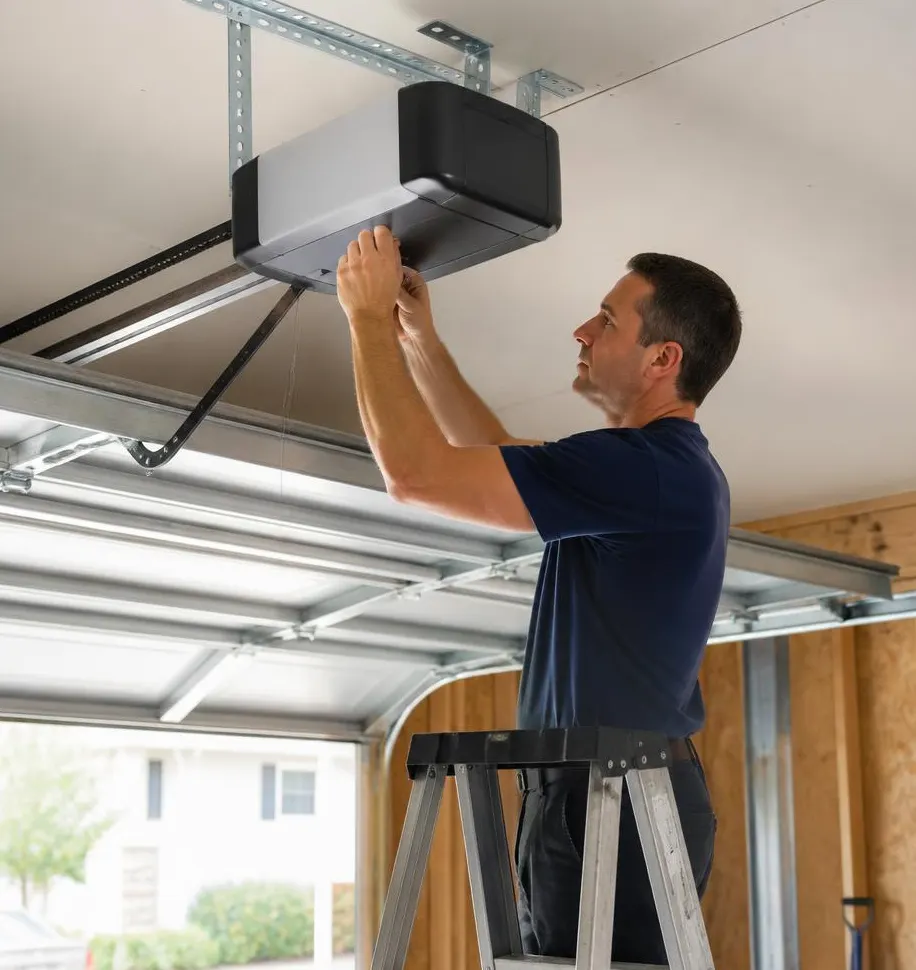
What a Technician Finds After a Break-In Attempt
The call usually starts the same way: a homeowner noticed the garage door was open, or half-open, or hanging crooked on the track, and nothing inside looks disturbed except maybe a bike or a cooler. When a technician gets there, the clues are small but telling. A bent bottom bracket where someone pried the door up with a crowbar. A mangled weather seal where a wire hanger got fished through the top corner to trip the emergency release. Scrape marks on the track where the door was forced past the rollers. None of this takes much skill. It takes thirty seconds, a quiet street, and a door that was not set up to resist it.
The Methods That Actually Work
Garage doors get breached in a handful of predictable ways, and almost none of them involve a sophisticated break-in. Knowing the method tells you exactly what to fix.
The Coat Hanger / Emergency Release Trick
Every garage door opener has a red emergency release cord so the door can be opened by hand during a power outage. If there's a gap at the top corner of the door — common on older doors or ones that have swollen or warped slightly from humidity — a thin wire can be slipped through, hooked around the cord, and pulled. The door disengages from the opener instantly and lifts by hand.
Simply Forcing the Door Up
If a door is unlocked, or if the opener's lock function isn't engaged, a determined person can just lift it. This works even better than it should when springs are worn or oversized for the door, because a door that's easy for you to lift with one hand is just as easy for someone else.
Prying at the Bottom or Sides
Off-track doors, bent tracks, or a bottom seal that's lost its shape leave a gap wide enough for a pry bar. Once the bottom corner flexes, the whole panel can be walked up the track by hand, especially on older steel doors that have started to rust at the stress points.
Old Remotes and Fixed Codes
Openers installed years ago sometimes use a fixed code that never changes — the same signal every time you press the button. Cheap code-grabbing devices can capture that signal from the street and replay it later. Modern rolling-code openers generate a new code every time, which makes this nearly impossible, but a lot of older setups around Gadsden County are still running on the original hardware from installation.
The Overlooked Side Door
Many garages have a man-door connecting to the backyard or house, and it's often the weakest link — a standard doorknob instead of a deadbolt, sometimes not locked at all since the overhead door feels like the real barrier.
The Habits and Hardware That Shut This Down
None of these fixes are expensive or complicated. Most are a weekend project or a short service call.
- Shield the emergency release. A simple zip-tie trick (looping a tie through the release mechanism so it can't be pulled from outside) or a dedicated shield kit blocks the coat-hanger method completely.
- Switch to a rolling-code opener if you're still running original equipment from years back. This single upgrade eliminates code-grabbing as a risk entirely.
- Use the lock function on your opener when you're away for more than a day, especially during hurricane season when the house may be empty for evacuation. This disables the remote until you manually re-enable it.
- Keep the door properly tensioned and on-track. A door that glides smoothly on balanced springs is also a door that's harder to force by hand — a door that's hard for you to budge is hard for an intruder too.
- Close every gap. Weather seals that have shrunk, cracked, or swollen from moisture create the openings that make hanger tricks and prying possible. Replacing a worn bottom seal or side weatherstrip closes that gap and helps with dust and water intrusion too.
- Deadbolt the interior door. Treat the connecting door to the house the same as a front door, especially if the garage isn't visible from the street.
- Add motion lighting and, if you're open to it, a camera on the opener. Many current smart openers include a camera and send an alert the moment the door moves, which turns a thirty-second job into one with an audience.
Where Local Weather Makes This Worse
Humidity and afternoon storms swell wood and even steel door panels slightly, which widens the exact gaps burglars use at the top and bottom corners. Salt-tinged air closer to the coastal side of the region speeds up rust on hinges, tracks, and bottom brackets, weakening the hardware that's supposed to hold the door firmly in its frame. A door that's properly maintained resists both the weather and the crowbar; a neglected one gives in to both.
When to Call Quincy Garage Door Pro
If your door has visible gaps at the corners, hangs unevenly, or came off-track during a storm, that's worth a look before it becomes an easy target — our Off Track Door Repair service gets the panel back on true and the seals tight again. If you're still using an original opener with a simple fixed-code remote, our Garage Door Opener Installation team can get you onto a rolling-code, app-connected system that closes that vulnerability for good. And if it's just been a while since anyone's looked at the springs, cables, and hinges, a Garage Door Maintenance & Tune-Up catches the rust, wear, and misalignment that make a door easier to force.
If any of this sounds familiar, give Quincy Garage Door Pro a call. We serve Quincy, Havana, Midway, Gretna, Chattahoochee, Tallahassee, Greensboro, and Mount Pleasant, and we can usually get a technician out fast to lock things down before they become a problem.