
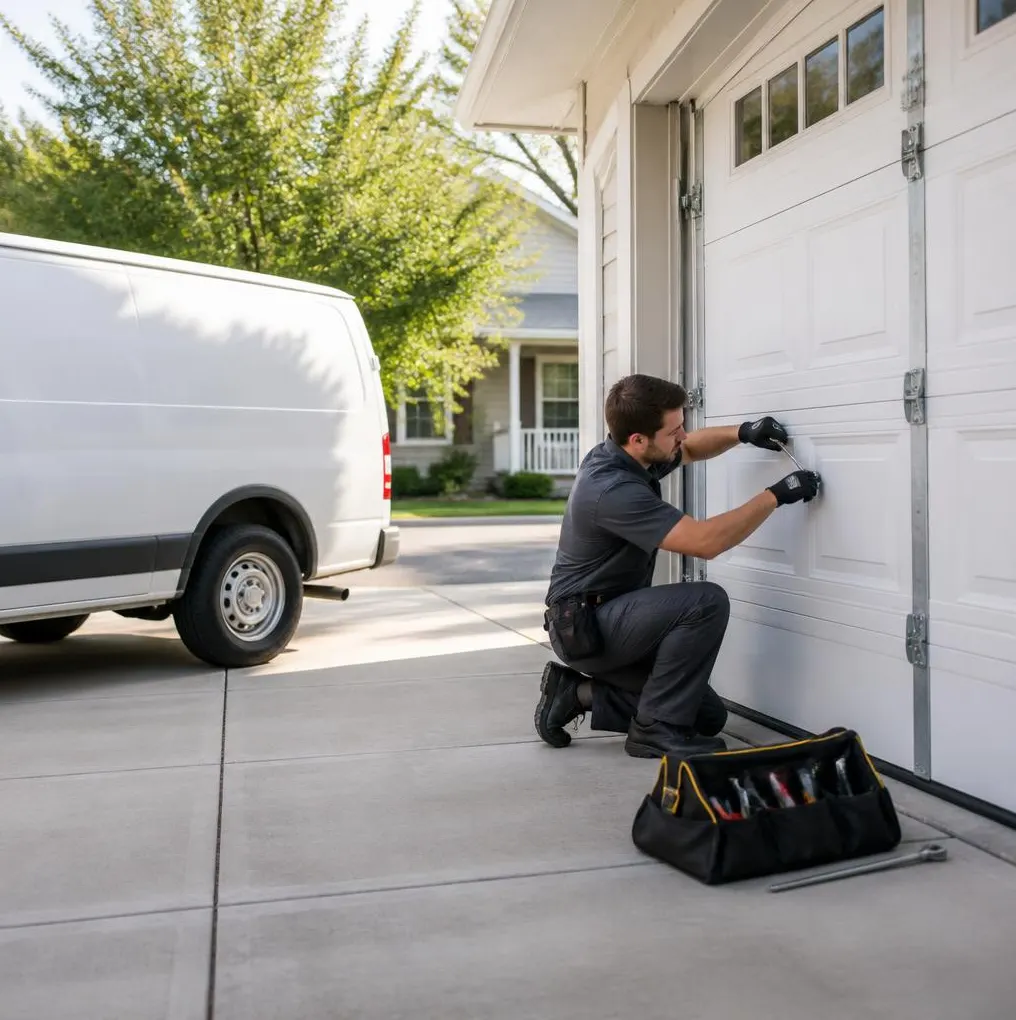
If your garage door's safety sensors keep blinking, stop and don't close the door manually to "get around" the problem. In almost every case, the fix is a few minutes of cleaning and realignment, not a bypass. Photo-eye sensors are the small boxes mounted a few inches off the garage floor on either side of the track, and they're one of the only things standing between a closing door and a child, pet, or parked car that's in the way.
What the Photo-Eyes Actually Do
Each sensor sends and receives an invisible infrared beam across the bottom of the garage opening. When something breaks that beam while the door is closing, the opener reverses the door instead of letting it keep coming down. It's a simple system, but it only works if both sensors are clean, properly aimed at each other, and wired correctly. Knock that alignment off by even a fraction of an inch and the door may refuse to close at all, or worse, close when it shouldn't.
Why Sensors Trip More Often in This Climate
Quincy's weather is hard on photo-eyes in ways that aren't obvious until you're staring at a blinking light. A few local culprits:
- Humidity and condensation: Fog or moisture film on the lens can scatter the infrared beam enough to cause false trips, especially on muggy mornings after an overnight temperature drop.
- Afternoon downpours: Wind-driven rain pushes dust, pollen, and grit toward the garage opening. That debris settles right on the sensor lenses.
- Rust and corrosion: Moisture that gets into the mounting brackets or wiring connections over time can corrode contacts, leading to intermittent signal loss that looks like an alignment problem but isn't.
- Swelling and shifting: Humidity causes wood framing and door tracks to expand and contract. If the sensor brackets are mounted to anything that moves even slightly, the beam alignment can drift.
- Storm impacts: A bumped bracket from yard equipment, a stray basketball, or minor storm debris can nudge a sensor just enough to break the line of sight.
What Goes Wrong If You Ignore It
A tripping sensor is annoying, but a bypassed sensor is dangerous. When homeowners disconnect the sensors or unplug the safety reversal wire to "make the door work," they remove the only thing preventing the door from closing on a person, pet, or vehicle. Garage doors are heavy, and openers are built to drive them with real force. Without the photo-eye circuit, the door has no way to know something is in its path. This isn't a minor convenience feature, it's the core safety system the opener was designed around.
Common Symptoms That Point to the Photo-Eyes
- The door starts closing, then immediately reverses with no visible obstruction
- The door won't close at all, and the opener's wall control light blinks a specific number of times (check your opener's manual for the code)
- One sensor's LED is solid while the other blinks or stays dark
- The door closes fine at night but misbehaves in bright morning or afternoon sun, which can suggest sunlight interference on the receiving sensor
How to Clean and Align Them Yourself
- Power down the opener at the wall switch or unplug it before touching anything.
- Wipe both lenses with a soft, dry cloth. Avoid household glass cleaner, which can leave a film; a lightly damp microfiber cloth works better in humid conditions.
- Check the brackets for looseness, rust, or visible bending. Tighten mounting screws by hand, don't overtighten into swollen wood.
- Look for a straight line between the two sensors. Most units have a small LED that lights steady when aligned correctly, loosen the wing nut or bracket screw slightly and nudge the sensor until the light stabilizes.
- Clear the sightline of cobwebs, leaves, stored items, or anything that's drifted into the beam path, common after a storm.
- Restore power and test the door with something harmless, like a cardboard box, placed in the beam path to confirm it reverses properly.
If the LEDs still won't hold steady after cleaning and basic alignment, the issue is likely a wiring fault, a failing sensor, or bracket damage, not something to force past.
When to Call Quincy Garage Door Pro
If you've cleaned and aligned the sensors and the door still reverses, won't close, or the LED codes don't match anything in the manual, it's time to call in a technician rather than keep testing it. This is especially true if the door has come off track recently, since a knocked bracket often travels with other damage. Our off-track door repair and garage door maintenance & tune-up visits both include a full check of the sensor wiring, bracket condition, and alignment, along with the rest of the hardware that humidity and storm season tend to wear down.
If your garage door's safety sensors are acting up, don't risk a bypass. Call Quincy Garage Door Pro and we'll get it diagnosed and fixed right, for homeowners across Quincy, FL and the surrounding communities.